Course Content
Self Esteem and Body Image
Whether you have a solid self-esteem, underlying issues, or known self-esteem issues, it's at the core of our program that you build a grounded positive body image and self-worth. It is extremely difficult to make changes if our self-concept isn't yet in a growth mindset.
0/1
Health risks from being overweight
Being in the overweight or obese category can affect us more than we may think. Here we educate on the affect or excess fat on our health so that we understand the core health reasons to motivate change. Whether you have current health issues or not, excess fat can lead to substantial health issues.
0/3
Awareness and Habits
Next we have information on habits. Behaviour change needs to be sustainable for you. So we need to establish new habits and retire old unhealthy habits. How do we do that? We'll briefly cover that here.
0/3
Nutrition
Nutrition is the process of eating and drinking that provides the body with critical nutrients to nourish our bodies. These nutrients in the right amounts support our body to grow, fight off illness, make decisions, move, and live well. Good nutrition is important to support our body's many extremely complex systems. Healthy eating gives our body its best chance at working well for our goals. This is because healthy eating includes a good balance of micro and macro nutrients that support healthy metabolism and physical processes in our body.
0/7
Movement
Movement encompasses many factors and types. We discuss a well rounded approach that looks at cardio, strength training, flexibility and balance. Above all, enjoyment of movement is our focus.
0/5
Sleep Matters
Maintenance and Relapse
The ultimate goal is to find a sustainable, maintainable lifestyle so that you manage your health and don't gain the weight back. Here we will establish a plan based on what you have learnt so far.
Your Jinjerli Getting Started Package

Sometimes gains are made in small changes and I want to demonstrate that in this section.

  1. Choose the product that is less (sugar, saturated fat, calories) than your standard product. If you do that for every meal of the day, you are potentially reducing your intake by hundreds of calories. See how to read food labels.
  2. Try time-restricted eating. Also called intermittent fasting, reducing your eating window makes you less likely to feel hungry. There is an adjustment period, but it can be useful if it works for you.
  3. Eat thermogenic and metabolism-supporting foods: protein-rich and fibre-rich foods, caffeine, chilli.
  4. Reduce the snack quantity – it is not a main meal
  5. Drink plenty of water and fluids. Sometimes when we feel hungry, we can be satiated by drinking – we may actually be dehydrated.
  6. Reduce your portion. You do not need to starve yourself, but you can test out how eating less feels. Eat a smaller amount. Wait 20 minutes. If you are still hungry, eat a little more.
  7. Reduce alcohol consumption. Alcohol reduces our bodies ability to burn fat.

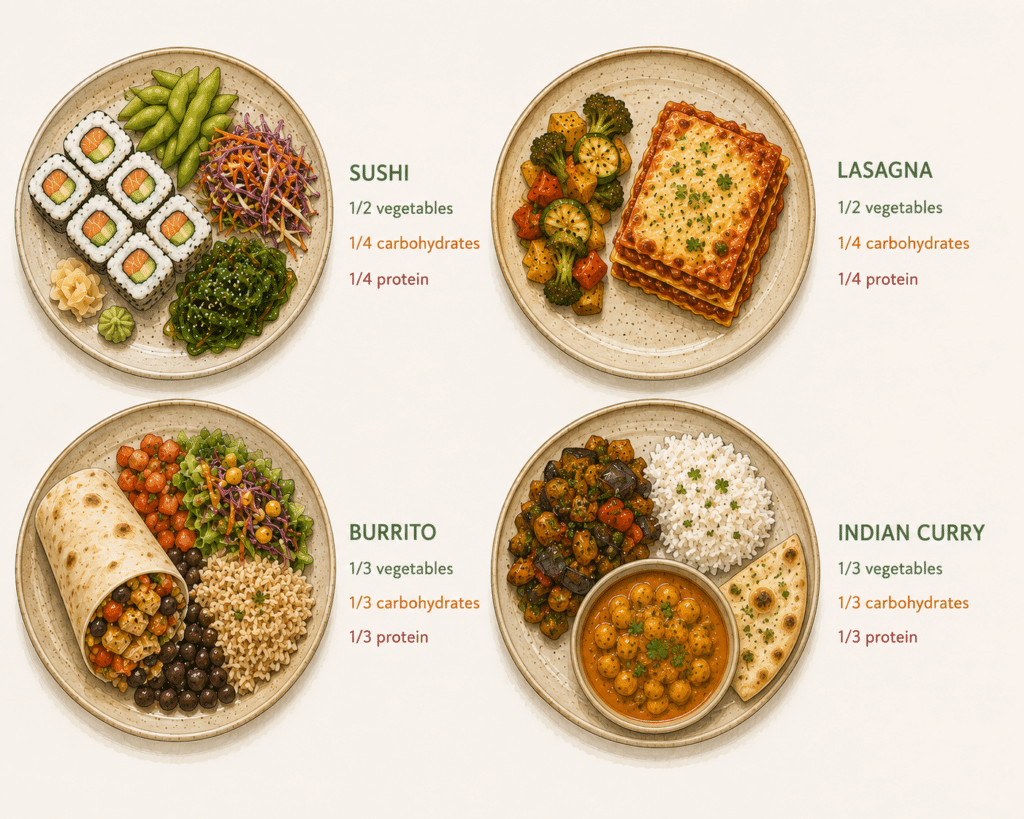
Attempt 1/3 1/3 1/3. 

This is the idea that approximately a third of your meal is vegetables. A third is protein sources, and a third is carbohydrate. This is a simple rule that helps you achieve a good balance of nutrients and feel full. Let’s look at examples of how that looks.
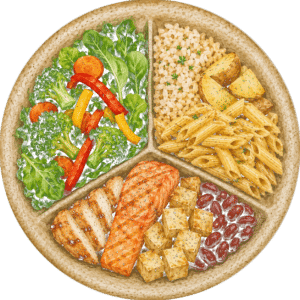
Now look at it in practice:
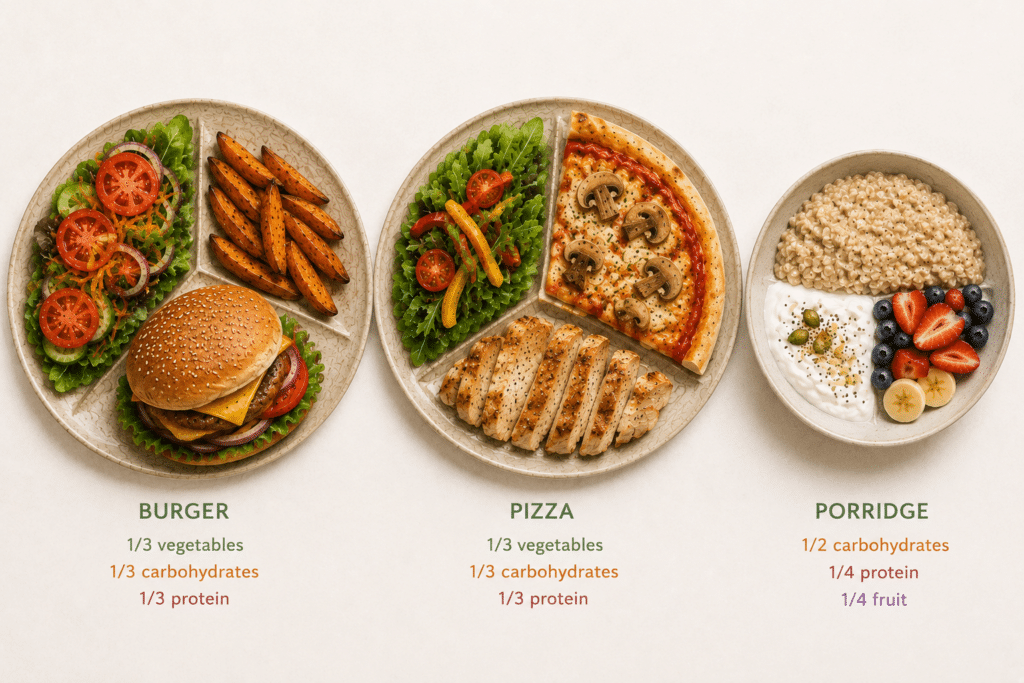
If you are looking at this image and going, do I really need to eat this much veg? 

You can ease up to this. And it need not be salad. Let’s look at it in other types of meals.